> ## Documentation Index
> Fetch the complete documentation index at: https://docs.withampersand.com/llms.txt
> Use this file to discover all available pages before exploring further.
# Slack
## What's supported
### Supported actions
This connector supports:
* [Read Actions](/read-actions), including full historic backfill. Please note that incremental reading is only supported for `conversations`, `files`, `usergroups`, `users.conversations`, and `users`. For all other objects, a full read of the Slack instance will be done per scheduled read.
* [Write Actions](/write-actions).
* [Proxy Actions](/proxy-actions), using the base URL `https://slack.com/api`.
### Supported objects
The Slack connector supports reading from the following objects:
* [auth.teams](https://docs.slack.dev/reference/methods/auth.teams.list) (full read each time)
* [conversations](https://docs.slack.dev/reference/methods/conversations.list) (supports incremental read, use this object to read all the channels in the workspace)
* [conversations.listConnectInvites](https://docs.slack.dev/reference/methods/conversations.listConnectInvites) (full read each time)
* [conversations.requestSharedInvite](https://docs.slack.dev/reference/methods/conversations.requestSharedInvite.list) (full read each time)
* [files](https://docs.slack.dev/reference/methods/files.list) (supports incremental read)
* [files.remote](https://docs.slack.dev/reference/methods/files.remote.list) (full read each time)
* [reactions](https://docs.slack.dev/reference/methods/reactions.list) (full read each time)
* [team.externalTeams](https://docs.slack.dev/reference/methods/team.externalTeams.list) (full read each time)
* [usergroups](https://docs.slack.dev/reference/methods/usergroups.list) (supports incremental read)
* [users.conversations](https://docs.slack.dev/reference/methods/users.conversations) (full read each time, use this object to only read channels that the user has access to)
* [users](https://docs.slack.dev/reference/methods/users.list) (supports incremental read)
The Slack connector supports writing to the following objects:
* [bookmarks](https://docs.slack.dev/reference/methods/bookmarks.add)
* [calls](https://docs.slack.dev/reference/methods/calls.add)
* [canvases](https://docs.slack.dev/reference/methods/canvases.create)
* [conversations](https://docs.slack.dev/reference/methods/conversations.create)
* [conversations.canvases](https://docs.slack.dev/reference/methods/conversations.canvases.create)
* [files.remote](https://docs.slack.dev/reference/methods/files.remote.add)
* [slackLists](https://docs.slack.dev/reference/methods/slackLists.create)
* [slackLists.items](https://docs.slack.dev/reference/methods/slackLists.items.create)
* [usergroups](https://docs.slack.dev/reference/methods/usergroups.create)
### Example integration
For an example manifest file of a Slack integration, visit our [samples repo on Github](https://github.com/amp-labs/samples/blob/main/slack/amp.yaml).
## Before you get started
To connect Slack with Ampersand, you will need [a Slack Developer Account](https://api.slack.com/developer-program/join).
Once your account is created, you'll need to create an app in Slack, configure the Ampersand redirect URI within the app, and obtain the following credentials from your app:
* Client ID
* Client Secret
* Bot scopes (user scopes are currently not supported)
You will then use these credentials to connect your application to Ampersand.
### Create a Slack Account
Here's how you can sign up for a Slack account:
* Go to the [Slack Sign Up page](https://api.slack.com/developer-program/join).
* Sign up using your preferred method and verify your email.
### Creating a Slack App
Follow the steps below to create a Slack app and add the Ampersand redirect URL.
1. Log in to your [Slack Developer](https://slack.com/signin) account.
2. Click **Your Apps**.
3. Click the **Create New App** button.
4. In the **Create a Slack App** pop-up window, enter the **App Name** and select the **Development Slack Workspace** where you want to develop your app. Click **Create App**.
5. In the left-hand sidebar, navigate to **OAuth & Permissions**.
6. In the **Redirect URLs** section, click **Add a Redirect URL** and enter the Ampersand redirect URL: `https://api.withampersand.com/callbacks/v1/oauth`.
7. Click **Add** and then **Save URLs**.
8. In the **Scopes** section, add the necessary **Bot Token Scopes** for your app by clicking on **Add an OAuth Scope** and selecting the required scopes. **User Token Scopes are currently not supported.**
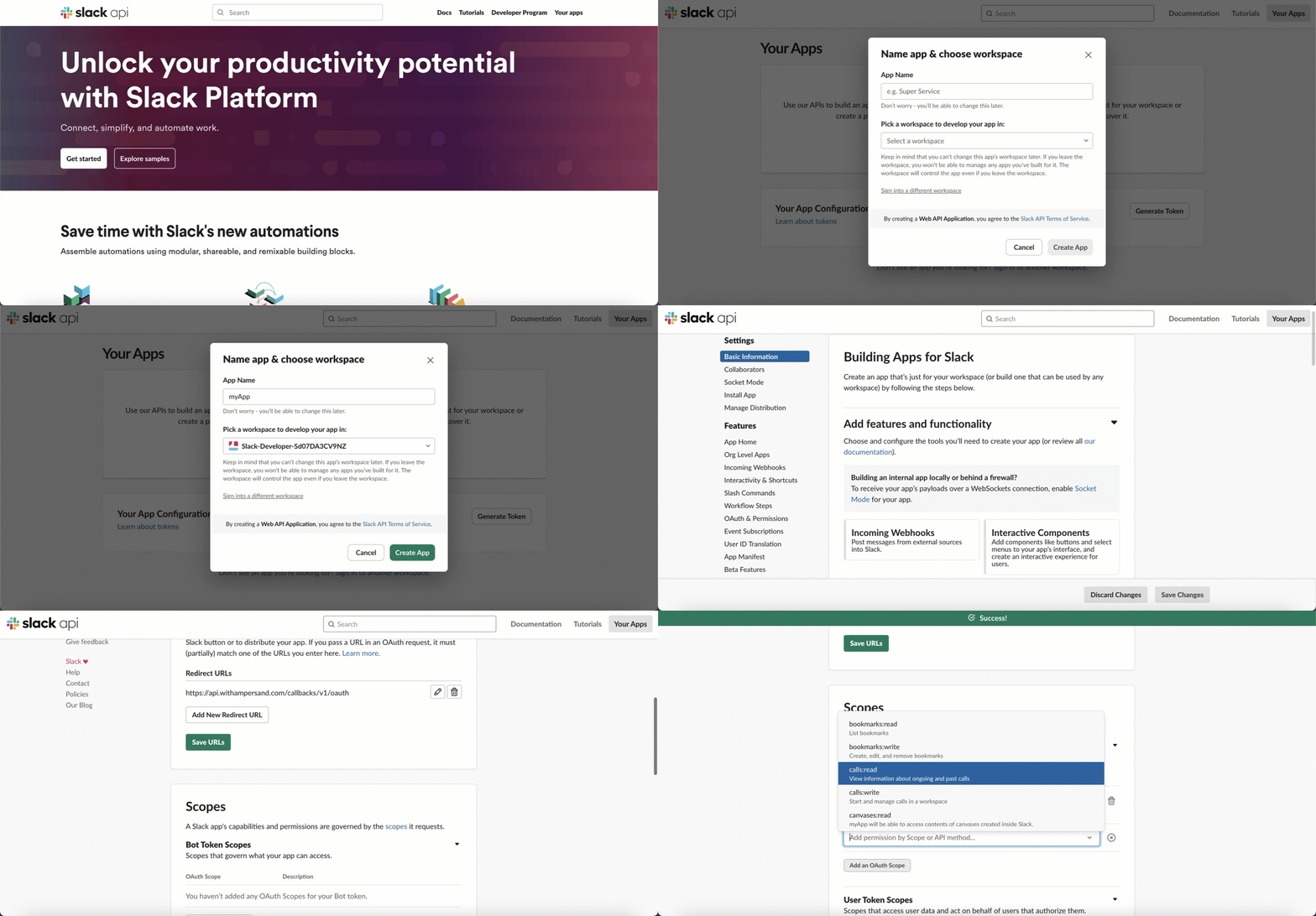 You will find the **Client ID** and **Client Secret** in the **Basic Information** section. Note these credentials, as you will need them to connect your app to Ampersand.
## Add Your Slack App Info to Ampersand
1. Log in to your [Ampersand Dashboard](https://dashboard.withampersand.com).
2. Select the project where you want to create a Slack integration.
You will find the **Client ID** and **Client Secret** in the **Basic Information** section. Note these credentials, as you will need them to connect your app to Ampersand.
## Add Your Slack App Info to Ampersand
1. Log in to your [Ampersand Dashboard](https://dashboard.withampersand.com).
2. Select the project where you want to create a Slack integration.
 3. Select **Provider Apps**.
4. Select **Slack** from the **Provider** list.
5. Enter the previously obtained **Client ID** in the **Client ID** field and the **Client Secret** in the **Client Secret** field.
6. Enter the **bot scopes** set for your application in *Slack*.
3. Select **Provider Apps**.
4. Select **Slack** from the **Provider** list.
5. Enter the previously obtained **Client ID** in the **Client ID** field and the **Client Secret** in the **Client Secret** field.
6. Enter the **bot scopes** set for your application in *Slack*.
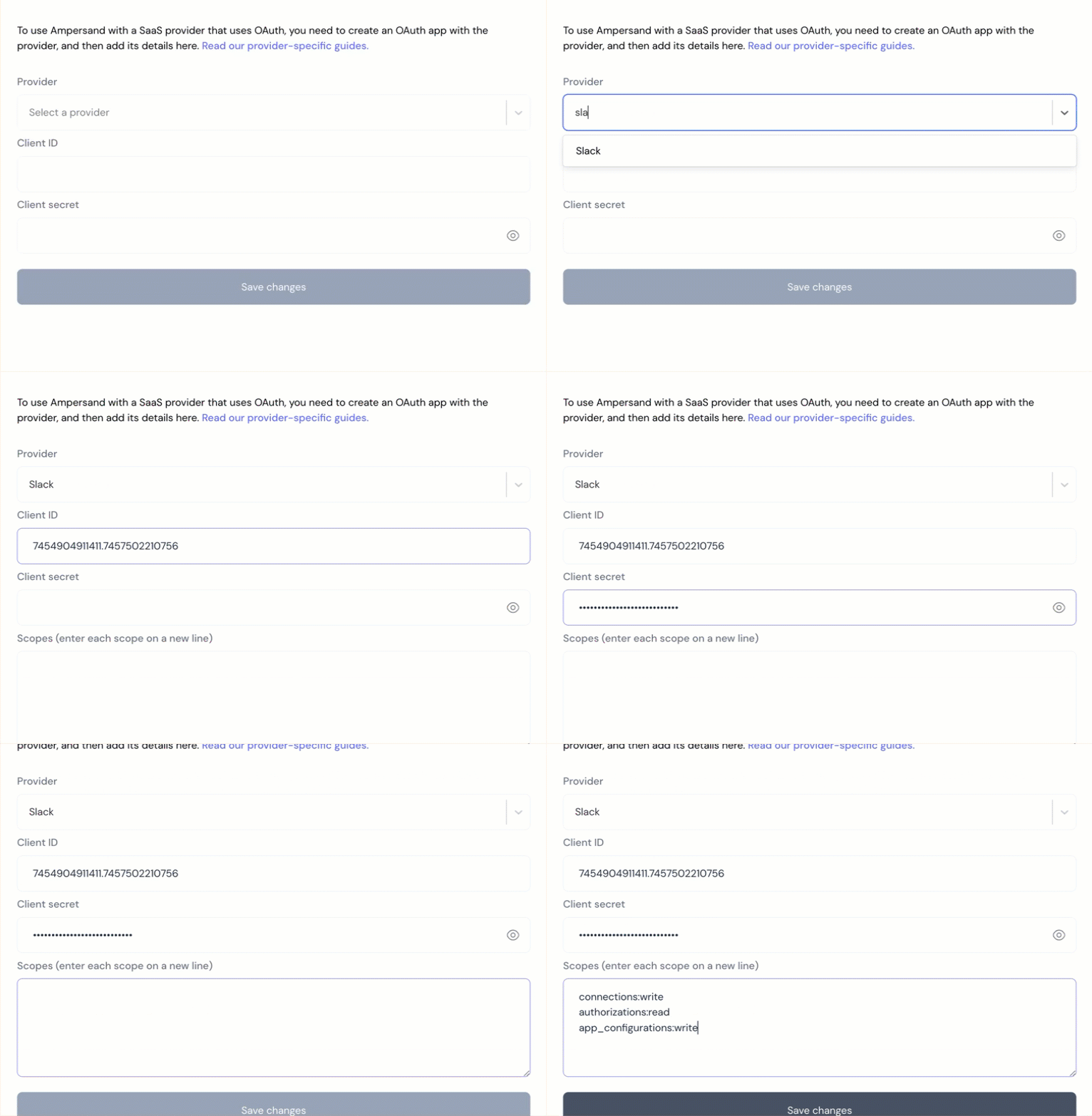 7. Click **Save Changes**.
## Using the connector
To start integrating with Slack:
* Create a manifest file like the [example above](https://github.com/amp-labs/samples/blob/main/slack/amp.yaml).
* Deploy it using the [amp CLI](/cli/overview).
* If you are using [Read Actions](/read-actions), create a [destination](/destinations).
* Embed the [InstallIntegration](/embeddable-ui-components#install-integration) UI component. The UI component will prompt the customer for their Slack authorization.
* Start using the connector.
* If your integration has [Read Actions](/read-actions), you'll start getting webhook messages.
* If your integration has [Write Actions](/write-actions), you can start making API calls to our Write API.
* If your integration has [Proxy Actions](/proxy-actions), you can start making Proxy API calls.
7. Click **Save Changes**.
## Using the connector
To start integrating with Slack:
* Create a manifest file like the [example above](https://github.com/amp-labs/samples/blob/main/slack/amp.yaml).
* Deploy it using the [amp CLI](/cli/overview).
* If you are using [Read Actions](/read-actions), create a [destination](/destinations).
* Embed the [InstallIntegration](/embeddable-ui-components#install-integration) UI component. The UI component will prompt the customer for their Slack authorization.
* Start using the connector.
* If your integration has [Read Actions](/read-actions), you'll start getting webhook messages.
* If your integration has [Write Actions](/write-actions), you can start making API calls to our Write API.
* If your integration has [Proxy Actions](/proxy-actions), you can start making Proxy API calls.